
If you were looking for a Health Equity. Than you’re search ends here. Today we’re going to talk about health equity. Let’s imagine that you’re a baseball fan on your way to a game. But when you reach the stadium, there’s a wooden fence blocking the view. Some people are standing on milk crates to catch a glimpse. Some are tall enough to not even need a crate, but they’re standing on a whole stack of them anyway. And some are standing in a ditch, where even a crate couldn’t game and some don’t. We face a similar situation in public health.
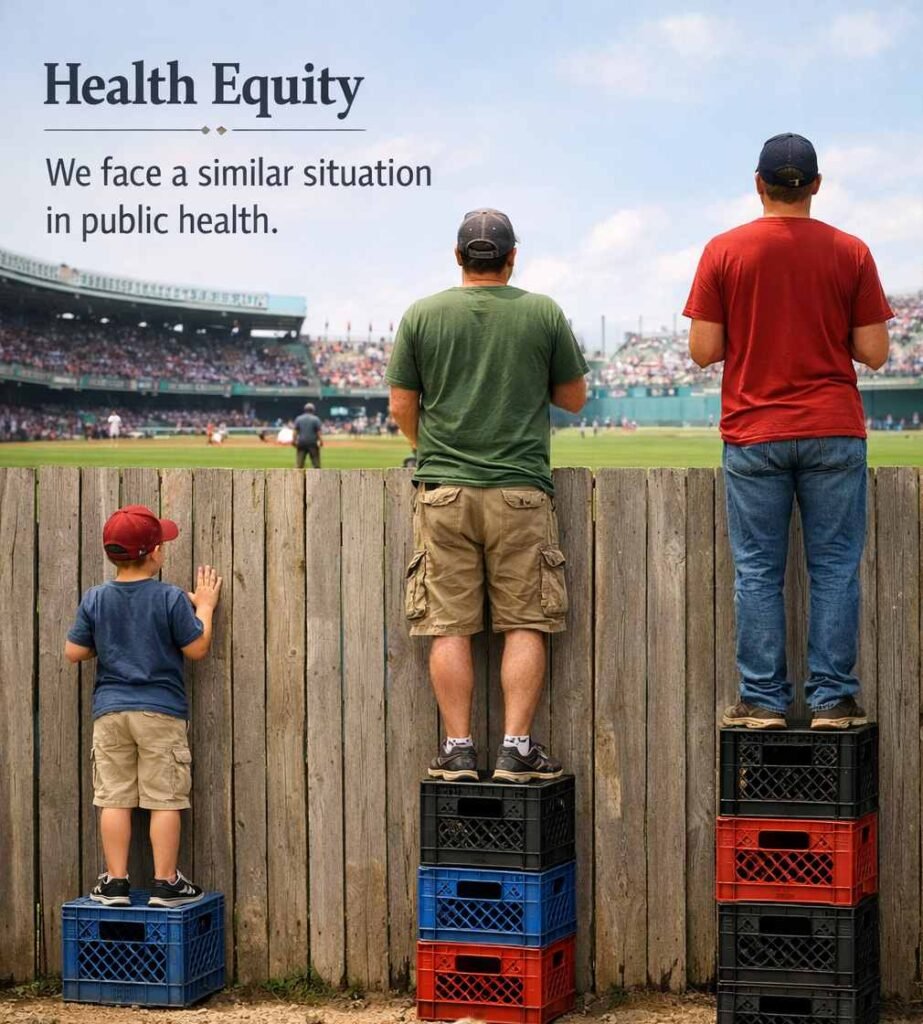
There are people who can easily access whatever resources and services they need, and others who struggle to get the basics, like health care, clean water, safe housing, education and a liveable wage. Which means that certain groups of people are more at risk for diseases but have less ability to get treatment. So they may be more likely to get severely sick or die from treatable and even preventable diseases. Let’s go back to our baseball example to explain more.
Just like a difference in height helped some people see the game, many health outcomes are a result of things we can’t change, like age or genetics. Bones become more brittle as we age, so we’d expect 80 year olds as a group to suffer more hip fractures than 30-somethings. On the othe3r hand, back at the game some people weren’t naturally tall enough to see and didn’t have any crates, and others were forced to stand in a ditch. Likewise, many gaps in health trends are caused by a lack of access to various resources, and are rooted in unfairness.
Unequal access to resources
- EDUCATION
- INCOME
- EMPLOYMENT STATUS
- HOUSING
All have an impact on their health. These are what we call the social determinants of health. And when nonmedical factors like these contribute to a difference in health, we call that difference a health disparity. Like Black mothers are almost three times more likely to die in childbirth than white others, and are less like to have access to quality prenatal care. There’s no biological reason for this, but there is a strong history of medical racism towards Black women.
So this is an example of racial inequity, or the unfair and unequal distribution of resources along racial lines. When addressing health disparities, some focus on equality, which would mean giving the same assistance to all. But this doesn’t often work in practice, because some people need more support or a different kind of support than others.
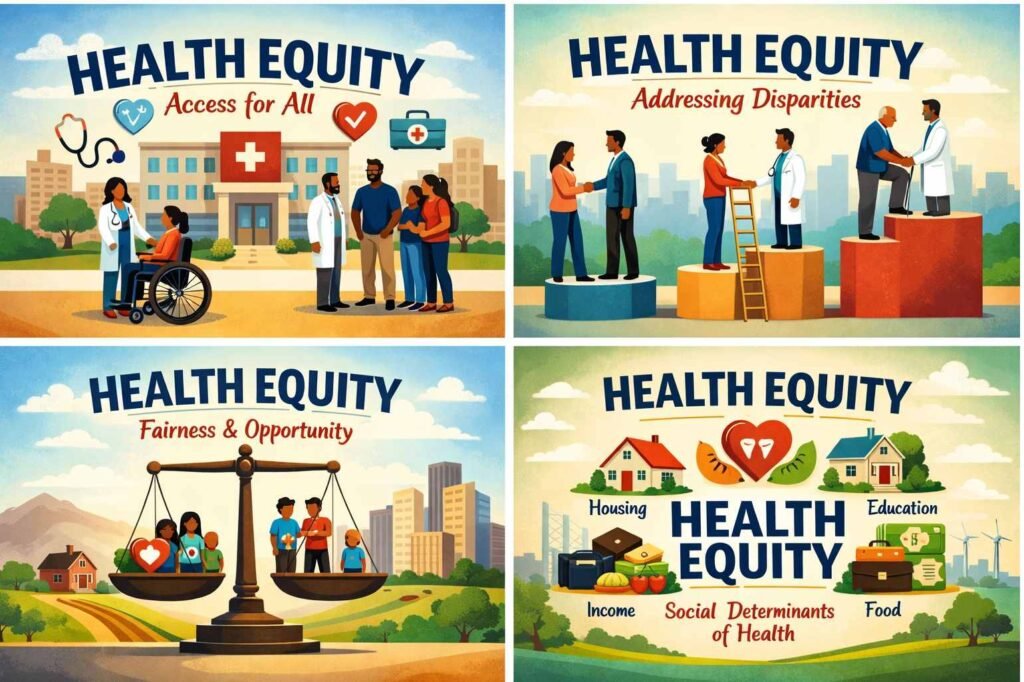
An online portal that lets you quickly sing up for vaccinations is a great idea, but for people who don’t have internet access or a car to get to the vaccine clinic, it’s still a one-size doesn’t fit all solution. That’s why public health professionals are focusing on equity. An equity approach strives to give everyone the chance to live their healthiest possible life, but gives extra attention to those who face ill health because of a lack of access or opportunities.
Like the more than 2 million people in the U.S. who don’t have access to running water or plumbing. Some of these folks have no choice but to get water through old, poorly-maintained pipes, which can lead to serious infections.
Groups often affected by poor water quality
- COMMUNITIES OF COLOR
- CHILDREN
- OLDER ADULTS
- LOW INCOME
- RURAL COMMUNITIES
Historically, less affluent neighborhoods haven’t received enough funding to fix their water infrastructure. To make sure this problem is handed equitably, APHA recommends that federal and local governments use any extra money to improve the water infrastructure in those neighborhoods. APHA also recommends that governments, schools, hospitals, and other branches of public service work together to identify and provide the specific can live their healthiest possible life.