
If you were looking for a Kidney Disease. Than you’re search ends here.
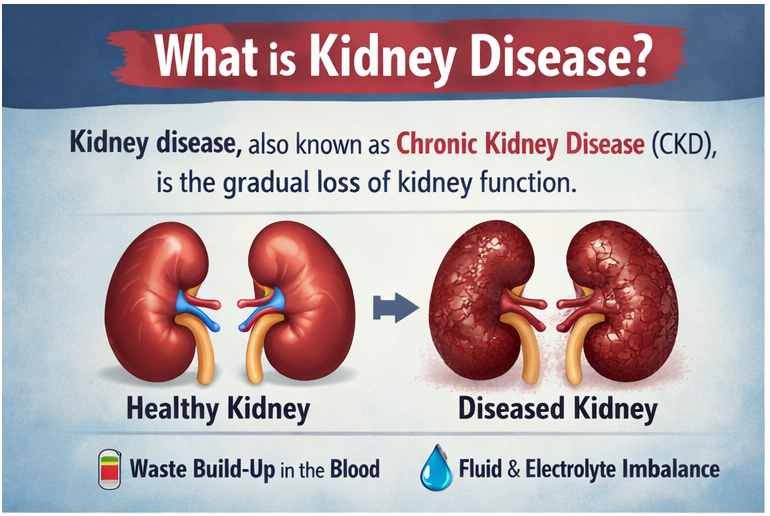
Today we’re going to talk about the 18 warning signs of kidney damage that you can actually see on your body. I just want to give you some quick basics just so you know what the kidney does. Both of the kidneys are deep underneath your rib cage and they have a little adrenal gland on top them. But they’re not just filters. If you take a look at a little cross-section of the kidney, you’ll see that there’s just a bunch of tubes that kind of go up and down and around. And each filtering unit of the kidney is called a nefron with a super concentrated amount of little capillaries that are in this little bundle, this tiny little nephron, which is literally the size of a speck of dust. But if you stretch out all of these capillaries in these tubes, it comes out to like 1 to 2 in each. and you have 1 million of these nefrons in each kidney. And the problem is as you age, you start losing these little nefrons to the point where you don’t necessarily feel any symptoms even at like 50% loss. Your kidneys can compensate and actually start to enlarge and you can have a lot of damage going on the kidney without really knowing it for some period of time. But I really want you to appreciate what the kidney really is. let’s just talk about what a nephron really is. it’s the tiniest biological filter that ever existed. And it’s super high energy.
MITOCHONDRIA Energy Factory in The Cell
50 GALLONS OF BLOOD
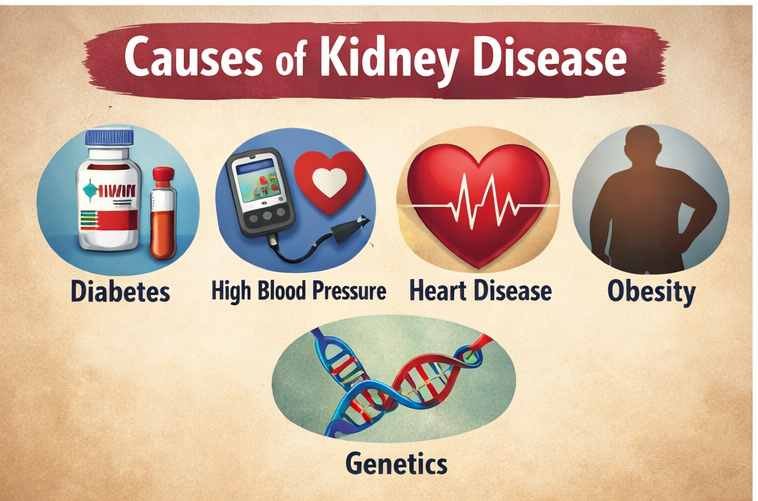
Yet, we only lose 1 two lers of fluid every single day. So, it’s super efficient and it’s an amazing efficient recycler of amino acids, proteins, electrolytes, glucose. So, it’s very selective, very magical, super efficient. And as you really start to understand this kidney and how amazing it is, it might get you to think twice before eating that junk food because of what it does to your body. One of the earliest problems of the kidney that can be observed in the urine is protein in the urine. That means there’s damage in this filtration unit and it’s leaking fluid into your urine. And there’s actually even a home test that you can get to pick this up. It’s a test that measures albumin, which is the protein part, creatin ratio, and it gives you a measurement. Okay? And you want that to be below 30 milligrams per gram to kind of detect what’s going on way before other symptoms might exist because as you know there’s a lot of people that have advanced kidney disease in this country. A lot of them are on a waiting list for a kidney transplant and there’s just not enough kidneys to go around and so then they and up in dialysis which the prognosis for that is not too good. So there’s different stages of kidney damage.
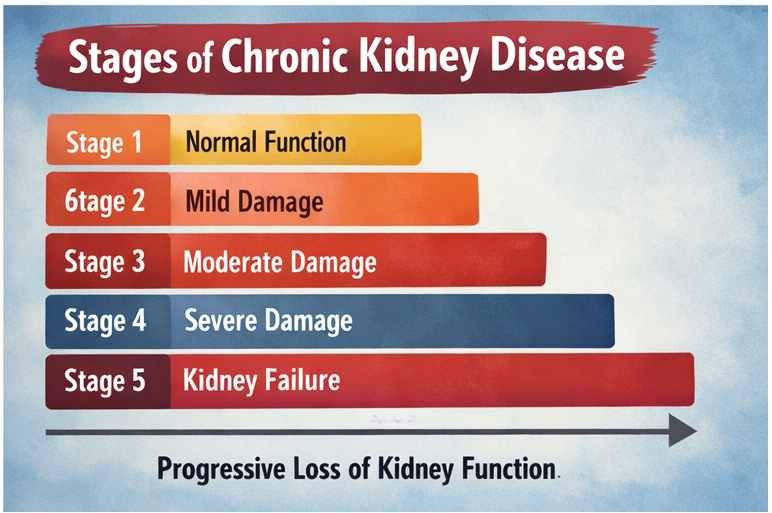
- 1-STAGE- YOU LOST 20% OF THE NEPHRONS.
- 2- STAGE- YOU LOST 60% OF THE NEPHRONS.
- 3- STAGE- YOU LOST 80% OF THE NEPHRONS.
- 4- STAGE- YOU LOST 95% OF THE NEPHRONS.
You have like 5% left. So 95% of all those nephrons, those filtration units are gone. So it’s something to put on your radar just so you can actually identify if you have a problem with that.
Advice on Preserving Kidney Health
1- Keep Yourself Well-Hydrated
Adequate hydration aids the kidneys in eliminating waste and poisons from the body. Steer clear of sugar-filled beverages and too much coffee.
2- Regulate Blood Sugar and Blood Pressure
Kidney disease is mostly caused by diabetes and high blood pressure. Appropriate care and routine observation are crucial.
3- Consume a Diet Friendly to Your Kidneys
Limit processed foods and cut back on salt. Prioritise eating moderate amounts of lean protein, healthy grains, fresh fruits, and vegetables.
4- Don’t Take Too Many Painkillers
Over time, frequent use of some painkillers, such as NSAIDs, might harm the kidneys. Take prescription drugs only as directed by a physician.
5- Regular Exercise
Exercise enhances blood circulation, promotes general kidney function, and aids in maintaining a healthy weight.
6- Give Up Smoking and Drink Less Alcohol
While heavy alcohol consumption can exacerbate renal disease, smoking decreases blood flow to the kidneys.
7- Obtain Regular Medical Examinations
Kidney disease can be stopped before it reaches more advanced stages by using blood and urine testing for early detection.