
This article will explain what a fat reduction diet is, how it works, the ideal meals to include, foods to avoid, and useful advice to help you get long-term results.
Comprehending Fat Loss -Weight Loss
When your body burns more calories than it takes in, you lose fat. We call this a calorie deficit. Your body starts using stored fat as fuel when you regularly consume fewer calories than it requires for energy.
But not all weight loss equates to fat loss. Dehydration, vitamin shortages, and muscle loss can all result from poor diets. A healthy diet for weight loss emphasizes:
- Maintaining muscular mass
- Burning fat that has been stored
- boosting metabolism
- Sustaining levels of energy
Regular activity and a nutritious diet enhance fat burning and support long-term outcomes.
Essential Elements of a Diet for Fat Loss
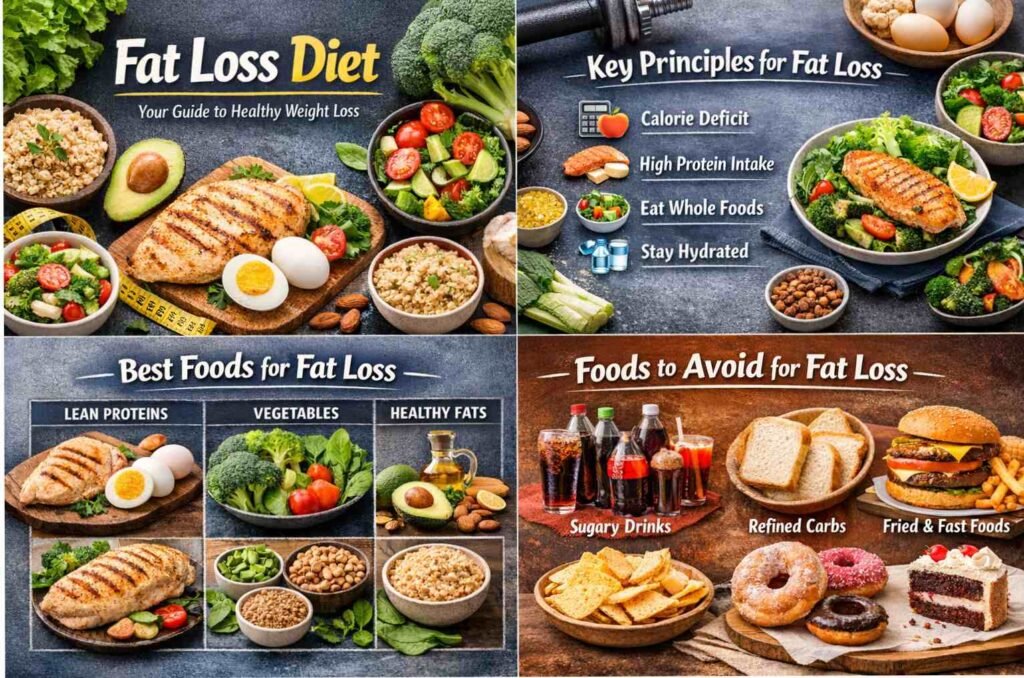
- Keep Your Calorie Deficit
The most crucial rule for losing weight is to consume fewer calories than you expend. Most people can lose fat steadily and healthily by cutting their daily caloric intake by 300–500 calories.
Extremely low-calorie diets should be avoided as they can impede metabolism and induce muscle loss.
- Consume Foods High in Protein
Because it preserves muscle mass and prolongs feelings of fullness, protein is crucial for fat loss. Because the body uses more energy to process protein, high-protein diets also speed up metabolism.
Excellent sources of protein include:
- Eggs
- Breast of chicken
- Fish
- Greek-style yogurt
- Beans with lentils
- Paneer and tofu
Try to incorporate protein into each meal.
- Select Unprocessed and Whole Foods
Whole foods have less empty calories and are high in fiber and minerals. These foods prevent overeating and keep you fuller for longer.
Examples consist of:
- Fresh veggies
- Fruits
- Whole grains
- Seeds and nuts
- Meats that are lean
Excess sugar, bad fats, and artificial additives are common in processed foods, which might hinder weight loss.
- Eat More Fiber
Fiber is essential for controlling weight. It enhances satiety, regulates blood sugar, and facilitates better digestion.
Foods high in fiber include:
- Oats
- Brown rice
- Products made from whole wheat
- Vegetables like spinach and broccoli
- Fruits such as berries and apples
Consuming foods high in fiber naturally lowers appetite and calorie intake.
- Keep Yourself Hydrated
Depending on your level of exercise, try to consume two to three liters of water per day.
Another way to cut calories is to drink water before meals.
Top Foods to Lose Weight
Foods High in Lean Protein
Lean proteins encourage fat burning while maintaining muscle.
Examples consist of:
- Breast of chicken
- Fish like tuna and salmon
- Eggs
- Dairy products with reduced fat content
Vegetables Weight Loss
Vegetables are rich in fiber and minerals yet low in calories. Large amounts of these can be consumed without appreciably raising caloric consumption.
The best veggies to lose fat include spinach, broccoli, cauliflower, cabbage, and zucchini.
Good Fats
Hormone balance and general health depend on healthy fats. They can aid in the reduction of body fat when taken in moderation.
Among the sources of good fats are:
- Avocados
- Almonds and nuts
- Olive oil
- Seeds like flaxseed and chia
Typical Errors to Avoid
Unknowingly, a lot of people make blunders that impede their ability to lose weight.
Typical errors consist of:
- Missing meals
- Adhering to incredibly low-calorie diets
- Steer clear of all carbs
- Over-reliance on supplements
- Not keeping track of serving sizes
Extreme dieting is seldom as beneficial as a balanced and steady strategy.
In conclusion
Healthy lifestyle choices, appropriate calorie management, and balanced nutrition should be the main goals of a fat-loss diet. Prioritize whole foods, lean proteins, healthy fats, and fiber-rich carbohydrates over fast fixes or restrictive diets.
You can lose weight sustainably and enhance your general health by combining a healthy diet with regular exercise, restful sleep, and stress reduction.
Recall that creating a better lifestyle that you can sustain for years to come is more important than simply reducing weight.