
One of the elements in modern diet that is most misunderstood is fat. For a long time, fat was seen as dangerous and the cause of heart disease, weight gain, and numerous other health issues. Nonetheless, studies have demonstrated that fat is a vital nutrient that is critical to preserving general health. The secret is to comprehend the many forms of fat, how the body uses them, and how much we should eat.
The definition of fat, its various forms, the advantages of good fats, the dangers of bad fats, and how to incorporate the proper fats into your diet will all be covered in this article.
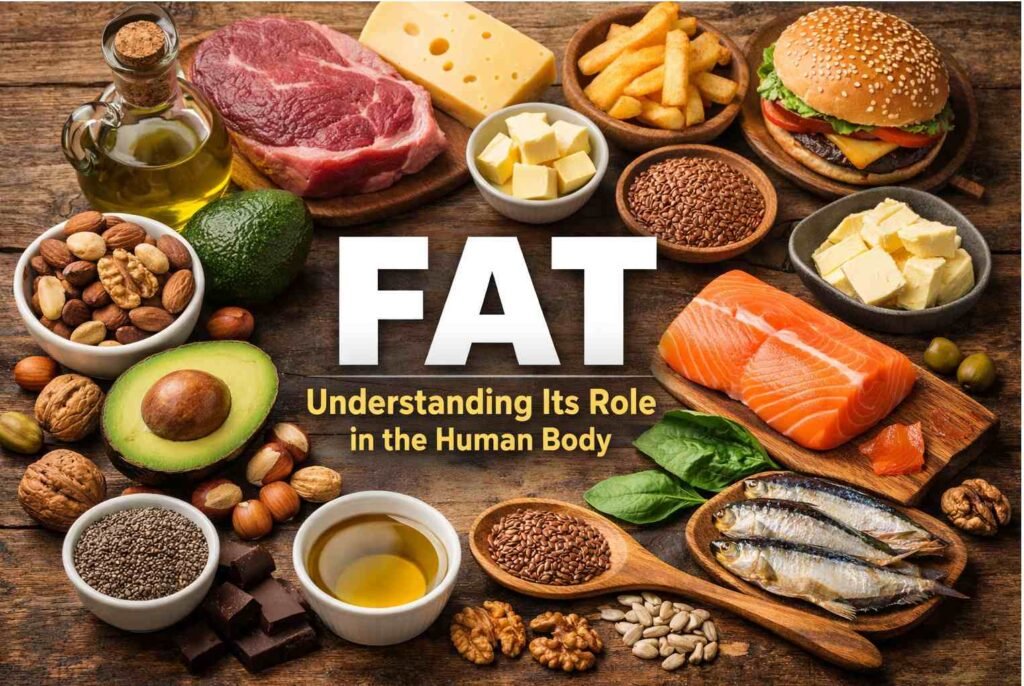
Fat: What Is It?
Along with proteins and carbs, fat is one of the three primary macronutrients that give the body energy. With nine calories per gram—more than twice as much as those found in proteins and carbs—it is a dense energy source.
Fatty acids, the chemicals that make up fats, are crucial for numerous biological functions. They are essential for the synthesis of hormones, cell development, and the absorption of specific vitamins.
Fat Types
Not every fat is the same. While some fats are good for your health, others can make you more susceptible to illness. You can make better nutritional decisions if you are aware of the many forms of fat.
- Fat that is saturated
At room temperature, saturated fats are usually solid. They are frequently present in meals derived from animals, including:
- Butter
- Cheese
- Red meat
- Whole milk
- Cream
Saturated fats can also be found in some plant-based sources, such as coconut and palm oils.
Fat that is not saturated
The healthiest kind of fat is thought to be unsaturated fats. They are frequently found in plant-based meals and are typically liquid at room temperature.
There are mostly two kinds:
Monounsaturated Fat
These fats can enhance heart health and lower levels of harmful cholesterol.
Typical sources consist of:
- Olive oil
- Avocados
- Almonds
- The peanut
- Fat that is polyunsaturated
Essential fatty acids, which the body is unable to synthesize on its own, are among these fats.
There are two significant kinds:
- Fatty acids with omega-3
- Fatty acids that are omega-6
Heart health and brain function are particularly enhanced by omega-3 lipids.
Among the sources are:
- Fish high in fat, such as sardines, mackerel, and salmon
- Walnuts
- The flaxseed
- Chia seeds
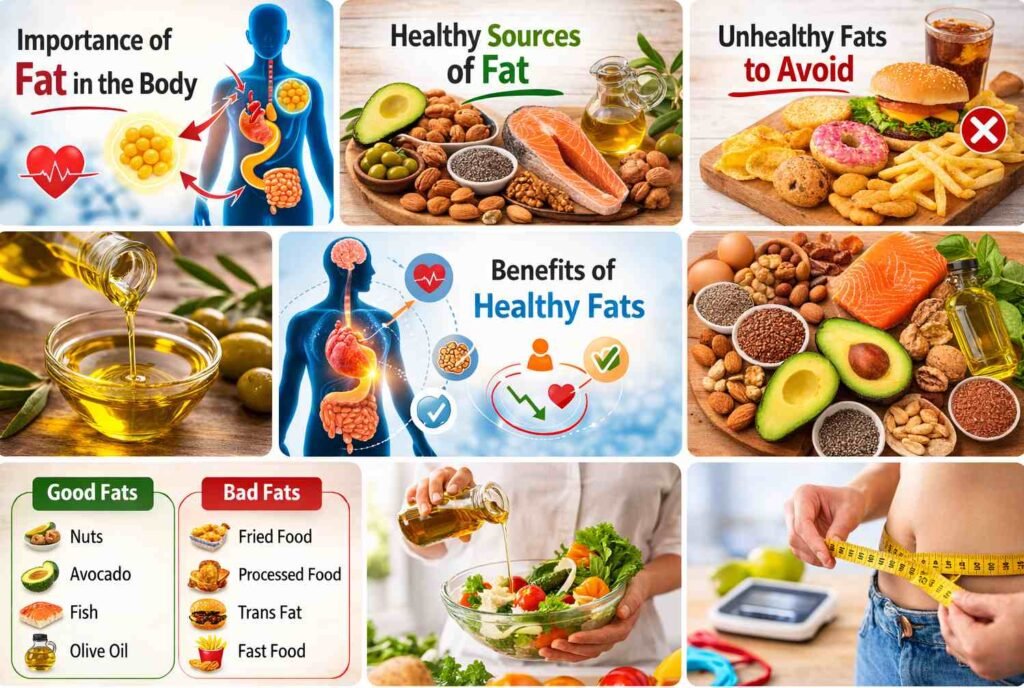
Trans Fat
The most dangerous kind of fat is trans fat. They are usually created through an industrial process called hydrogenation, which turns liquid oils into solid fats.
Trans fats are frequently present in:
- Foods that have been processed
- Snacks in packaging
- Fried foods
- Margarine
- Commercial baked goods
Advice on Eating Fat in a Healthful Way
To help you maintain a healthy fat consumption, consider these easy tips:
- When cooking, use olive oil instead of butter.
- Consume fish at least twice a week.
- Eat nuts as a snack rather than processed meals.
- Steer clear of packaged and fried foods that are high in trans fats.
- Select dairy products with a low or moderate fat content.
In conclusion
Energy production, brain function, vitamin absorption, and general health all depend on fat, an important nutrient. Healthy fats like monounsaturated and polyunsaturated fats can offer major health benefits, but bad fats like trans fats should be avoided.
Maintaining a balanced diet is essential. Rather of doing away with fat entirely, concentrate on selecting healthy sources and consuming them in moderation. You can benefit from fat while lowering your chance of developing chronic illnesses by making wise dietary decisions.