
If you were looking for a Belly Fat. Than you’re search ends here. One of the most prevalent health and fitness issues among people worldwide is belly fat. Even after experimenting with various diets and exercise regimens, many people still suffer with excess weight around the waist. If left untreated, belly fat can cause major health issues in addition to impairing confidence and looks. The good news is that abdominal fat can be decreased in a sustainable and healthful manner by making the appropriate lifestyle adjustments. This post will explain what belly fat is, how it builds up, the dangers it presents, and useful methods for getting rid of it.

Belly Fat: What Is It?
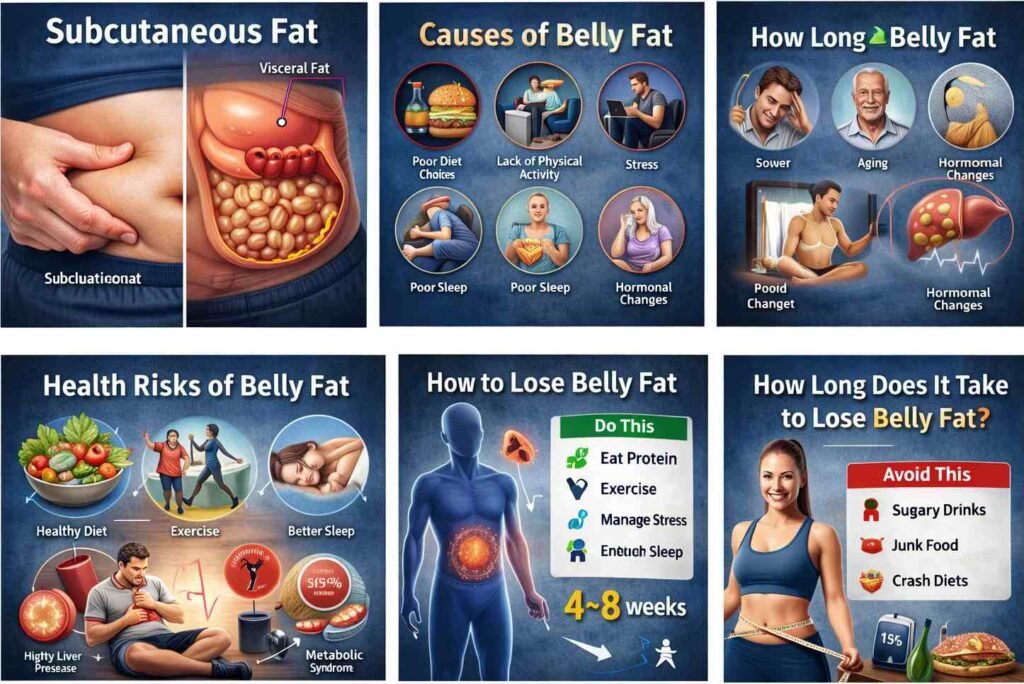
Excess fat that is stored around the abdomen is referred to as belly fat. There are mostly two kinds:
- Fat beneath the skin
This type of fat is kept beneath the skin. You may pinch the soft fat around your waist. - Fat in the viscera
Internal organs like the liver and intestines are surrounded by this fat, which is stored deeper in the abdomen. Because visceral fat alters organ function and raises health risks, it is more harmful.
Waist measurements are frequently more significant than body weight alone because many people may appear thin but nonetheless have visceral fat.
What Causes an Increase in Belly Fat?
The development of abdominal fat is caused by a number of causes.
- Bad Dietary Decisions – Weight gain, particularly around the abdomen, is caused by consuming large quantities of processed meals, sugary drinks, refined carbohydrates, and unhealthy fats.
- Insufficient Exercise – A sedentary lifestyle promotes fat storage by slowing metabolism and lowering calorie burning.
- Tension – Stress raises the hormone cortisol, which is associated with belly fat storage.
- Restless Nights – Regularly getting fewer than 6–7 hours of sleep throws off hunger hormones, which leads to overeating and weight gain.
- Getting older – It is easier to develop fat as people age because their metabolism slows down and their muscular mass shrinks.
- Modifications in Hormones – Gaining belly fat can result from hormonal imbalances, particularly during menopause or as a result of illnesses.
Risks to Health from Belly Fat
There is more to belly fat than meets the eye. It has a high correlation with major health issues like:
- Diabetes type 2
- Heart conditions
- elevated blood pressure
- Liver fatty disease
- Some types of cancer
- Resistance to insulin
- The metabolic syndrome
Belly fat reduction dramatically reduces these health hazards and enhances general wellbeing.
The Greatest Natural Ways to Reduce Belly Fat
Make Dietary Changes.
The most important factor in fat loss is diet.
Consume extra protein.
Protein protects muscle mass, increases metabolism, and decreases appetite. Add beans, lentils, fish, eggs, dairy, and lean meat.
Eat more fiber.
Soluble fiber prolongs feelings of fullness by slowing down digestion. Consume fruits, vegetables, legumes, oats, and flaxseeds.
Cut back on refined carbohydrates and sweets.
White bread and sugary foods raise insulin levels, which promote fat storage. Instead, opt for entire grains.
Limit the amount of food you eat.
If consumed in excess, even healthful meals can cause weight gain.
Increase your water intake.
Drinking enough water facilitates digestion and cuts down on pointless munching.
Engage in Regular Exercise
Exercise aids in fat loss and calorie burning.
Walking, jogging, cycling, swimming, and dancing are examples of cardio workouts that increase heart health and burn calories.
Gaining muscle through strength training raises metabolism and aids in fat burning even when at rest.
Aim for two to three times a week of strength training in addition to at least 150 minutes of moderate activity.