
One of the most well-liked methods for losing weight and leading a healthy lifestyle is intermittent fasting, or IF. Intermittent fasting emphasizes when you eat rather than what you consume, as is the case with typical diets. Because it makes meal planning easier and can easily be incorporated into regular routines, many people find it easier to follow.
This post will explain intermittent fasting, including its definition, advantages, common practices, and helpful advice for a safe start.
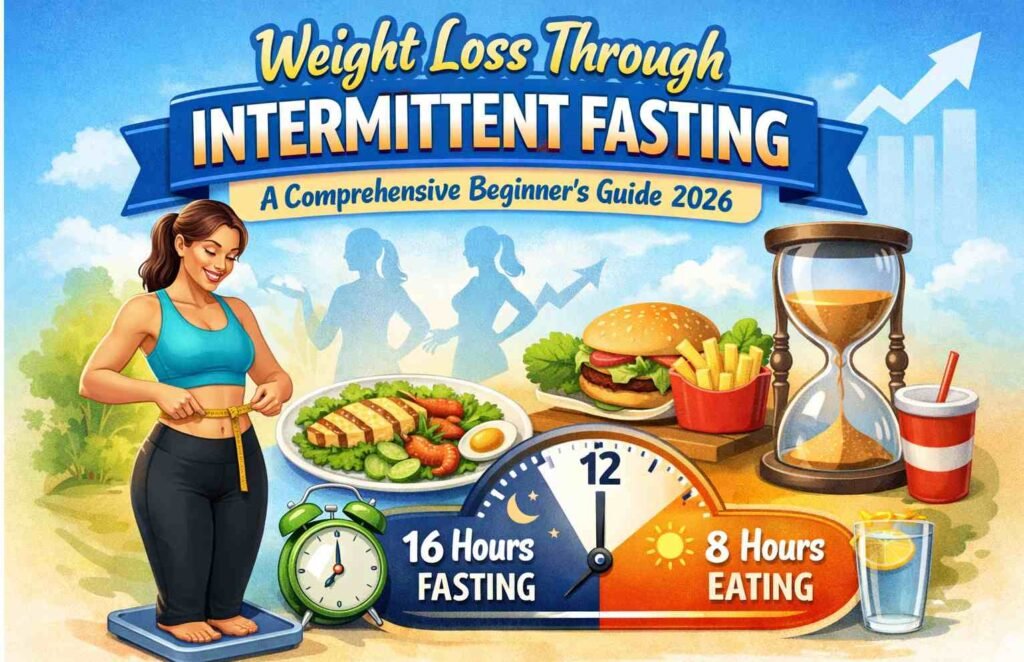
Intermittent fasting: What is it?
The Benefits of Intermittent Fasting for Weight Loss.
There are various ways that intermittent fasting can aid in weight loss:
- Lowers Calorie Consumption
You naturally consume fewer calories when you eat inside a narrower time span.
- Enhances Hormonal Performance
Fasting increases hormones that aid in burning stored fat and decreases insulin levels, increasing the amount of fat that can be used as fuel.
- Promotes the Burning of Fat
The body starts using stored fat as fuel after going for several hours without eating.
- Promotes Healthy Metabolism
Intermittent fasting has been associated with better weight management by lowering inflammation and improving blood sugar regulation.
Common Techniques for Intermittent Fasting.
The following are the most popular methods:
- The 16:8 Method
Eat within an 8-hour window and fast for 16 hours.
For instance, eat from 12 to 8 p.m.
It’s easy to use and sustainable, making it ideal for novices.
- The 14:10 Method
Eat within 10 hours after a 14-hour fast.
A good place to start if you’re new to fasting.
- The 5:2 Approach
Five days a week, eat regularly, and on two non-consecutive days, consume no more than 500–600 calories.
- Fasting on Different Days
Alternate days of regular eating with days of low-calorie fasting. more difficult and typically not advised for novices.
What Foods Are OK to Eat While Fasting?
You should refrain from consuming calories when you are fasting. The following choices are permitted:
- Water
- Black coffee (no cream or sugar)
- Tea without sugar
- Tea made with herbs
- Electrolyte water (sugar-free)
These beverages support hydration and appetite control.
Advantages Not Just for Losing Weight
There may be further advantages to intermittent fasting as well:
- Enhanced sensitivity to insulin
- Improved digestion
- Enhanced mental lucidity
- Potential improvement in indicators of heart health
- aids in the processes of cellular repair
However, individual outcomes differ.
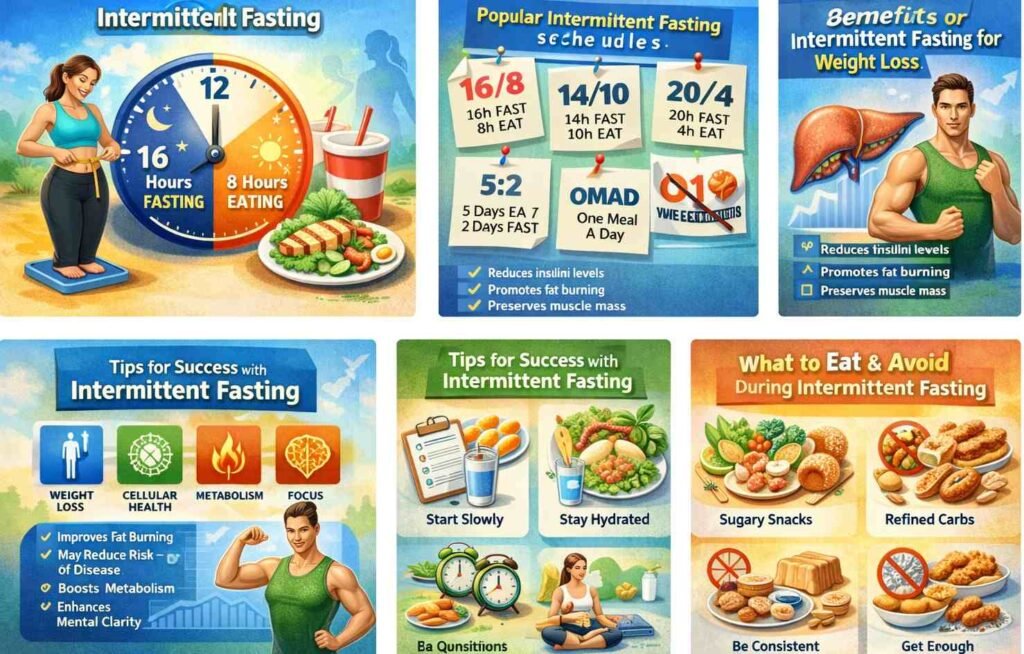
Advice for Effective Intermittent Fasting: Begin Slowly
Before switching to extended fasting windows, start with a 12- to 14-hour fast.
Consume meals that are balanced.
To feel fuller for longer, prioritize whole meals, fiber, protein, and healthy fats.
Drink plenty of water.
Stay hydrated throughout the day.
Steer clear of binge eating
Overindulging during meal windows is not justified by fasting.
Make Time for Sleep
Sleep deprivation might delay growth and raise hunger hormones.
Common Errors to Steer Clear of
- Junk food consumption during mealtimes
- Insufficient protein intake
- First, excessively long fasting windows
- Disregarding signs of hunger and exhaustion
- Anticipating immediate outcomes
Weight loss happens gradually, and long-term progress is more important.
For whom is intermittent fasting inappropriate?
The following people might not benefit from intermittent fasting:
- Women who are nursing or pregnant
- People who suffer from eating disorders
- Individuals that suffer from specific illnesses
- People taking drugs that need to eat
- People that are underweight
If you are unsure, speak with a healthcare provider before beginning.